
Stay in Uvita
The town at the entrance to Marino Ballena National Park, and the middle of the Costa Ballena.

Casa Canto Ballena
Uvita3 bed4 bathsleeps 8
from $149 / night

Casa Fe
Uvita4 bed4 bathsleeps 8
$9,040 / month
Monthly let, offered for its owner

The River House
Uvita3 bed2 bathsleeps 6
from $103 / night

Uvita Garden Villa
Uvita4 bed3 bathsleeps 8
from $160 / night

The Ballena Escape
Uvita3 bed2 bathsleeps 6
Let long-term
Uvita sits at the centre of the stretch of coast between Dominical and Ojochal, and it is the practical base for most of what people come here to do. The national park entrances are minutes away, the boats leave from here, and there is enough town to buy groceries and eat well without it feeling like a resort strip.
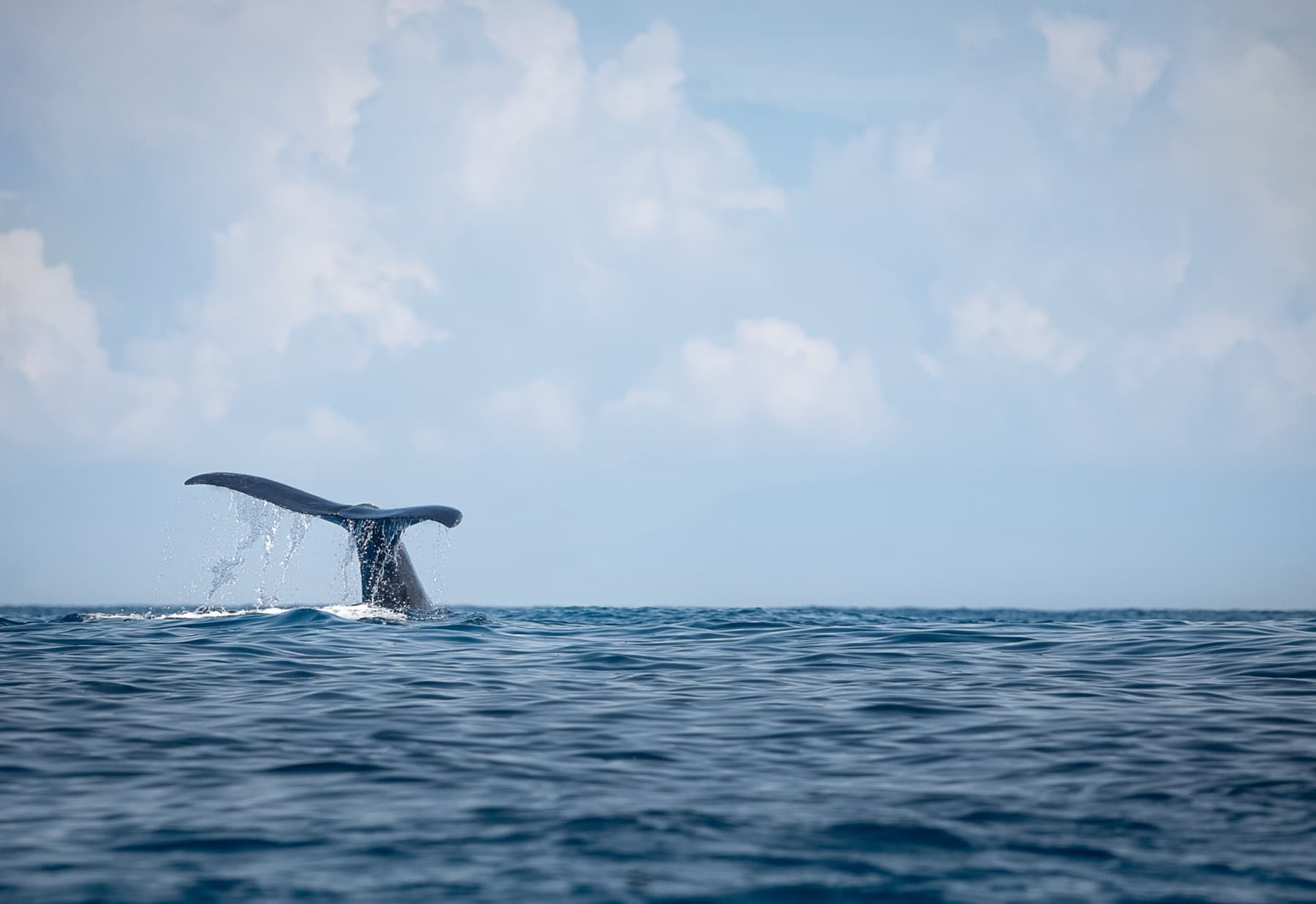
The bay in front of it is Bahía Ballena, named for the humpbacks that come here twice a year to calve. At low tide the sandbar at the centre of the park emerges in the shape of a whale's tail, which you can walk out onto.
Homes here divide roughly into two kinds: the flat land near the bay, minutes from the park and the town, and the hills above it, where the views are better and the road matters more. We will tell you honestly which one a house is before you book.
What is close by
Places marked protected are protected land or a regulated activity.
Marino Ballena National Parkprotected
The protected marine park in front of town, and the reason whale watching here is regulated rather than a free-for-all. Four entrances, each onto a different stretch of beach.
The Whale's Tailprotected
A sandbar inside the park that appears at low tide in the shape of a tail. Check the tide table before you walk out, and check it again before you walk back.
Whale and dolphin tripsprotected
Boats leave in the morning when the sea is calmest. Inside the park, licensed operators keep their distance and limit time with each group.
Uvita Waterfall
A short walk from town, with a natural rock slide into the pool at the bottom. Busiest in the middle of the day.
Caño Island Biological Reserveprotected
A full-day boat trip offshore, and the best diving and snorkelling on this coast: clear water, reef, rays and turtles. Visitor numbers are capped, so book a few days ahead.
The weekly feria
The farmers market, and the easiest way to stock a kitchen with what is actually in season.
Getting here
La Managua (XQP), Quepos
The closest airport, roughly an hour and a half north on the coastal road. Small domestic flights from San José, and the shortest drive of any option.
San José (SJO)
The main international airport. Around three to four hours by road, most of it straightforward, and the route most people take.
Palmar Sur (PMZ)
A small domestic airport to the south, closer if you are staying at the Ojochal end of the coast.
Good to know
Do not leave anything in the car
Not in the boot, not under a seat, not for five minutes at a trailhead or a beach car park. Break-ins here are opportunistic and a visibly empty car is rarely touched.
Swim where the lifeguards are
The rip currents on this coast are real and they catch strong swimmers. On beaches with towers, swim between them; on beaches without, ask before you go in.
Check the tide before you walk out
The Whale's Tail sandbar and the sea caves at Ventanas are only reachable at low tide, and the water comes back faster than people expect. Check the table, and check it again before walking back.
Carry some cash
Cards work in most restaurants and supermarkets. The feria, smaller sodas, parking attendants and some park entrances are easier with colones.
Ask about the road before you book a car
Whether a house needs a 4x4 depends on the specific house and the month. We will tell you honestly rather than let you discover it on arrival in the dark.
Staying in Uvita
- What is the closest airport to Uvita?
- La Managua (XQP) at Quepos is the nearest, roughly an hour and a half north. Most visitors fly into San José (SJO) instead and drive down in three to four hours, or take a domestic hop to Quepos or Palmar Sur.
- Is Uvita a good base for the whole Costa Ballena?
- Yes. It sits in the middle, so Dominical is a short drive north and Ojochal a short drive south, and the national park entrances are minutes away.
- Do I need a 4x4 to stay in Uvita?
- It depends entirely on the house. Homes on the flat land near the bay are usually fine in any car; homes in the hills often are not, particularly in the green season. Ask us about the specific house before you book a vehicle.
- When should I come for whales?
- The southern migration peaks in September and October and is the bigger of the two. A smaller northern group is best in January and February, which is also the driest, calmest time of year.
Find a home for your dates.
Every house has its own calendar. Choose your dates and ask for them, or send us your dates and we will tell you what suits the group.
or use the contact form, or write to info@wildrootscr.com